
There are many communication and rhetoric seminars with different approaches. Some deal with body language. Others with persuasiveness, quick-wittedness, or voice training. We don't do that! What do we do differently? We focus on the combination of understanding and being understood. In other words: information processing and impulses for action.
The energetic signature
Our experience shows that the power of communication is largely influenced by your energetic signature. Your energetic signature comes from deep within you. If you feel insecure, this insecurity will show in all your communication channels. If you are moderately competent, you can initially cover this up. But over time, this core will become visible. We are convinced that the consistent development of your energetic signature is the best investment you can make in your communication effectiveness.
Meaning and substance of "The Power of Language"
- Competence
Two different types of competence determine your effectiveness as a communicator. - Information processing/understanding
One skill is to deeply understand how you and other people take in and process information. - Impulses for action / Being understood
Another skill is how you and other people can take powerful action through communication.
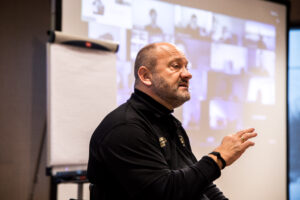
It doesn't matter which "Power of Language" seminar you start with. What's important is that you understand and apply the content of both seminars! You can get more insights into the seminar content in the video with Boris Grundl. One topic covered in the seminar, for example, is the difference between being proactive and reactive.
Think first, then act
"You have to tackle this proactively!" You've probably heard this training slogan before. Proactivity is in: take the bull by the horns, face change head-on. Those who don't are considered weak or slow to react, or both. Is this accurate, or is it just another trend? Superficial wisdom is turned into catchphrases and then exploited as the next big thing in workshops and coaching sessions. It is worth taking a closer look.
Once again, hasty judgment leads us down a dead end. Cato the Elder said, "Master the matter, then the words will follow."Just as speaking should not precede deeper understanding, action should not usually precede thought. Proactive and reactive are not good or bad in principle. They are neutral. Proactive action means healthy initiative, but also the risk of being hasty and superficial. Reactive action means doing things in a well-considered and reasoned manner, but carries the danger of unnecessary hesitation and procrastination.
It's perfectly fine if you're the reflective or thoughtful type.
It is important that you can take action once you have thought something through and that you know when to act first and when to think first. After all, being proactive is not always the best way to tackle a problem at its root. Many challenges and dangers can only be overcome through careful consideration and well-founded action. You will recognize this when similar obstacles keep cropping up. You can proactively extinguish a fire quickly. However, the cause of the fire remains and can spark a new fire at any time. You probably won't spend a long time analyzing the situation if someone in your rope team slips while mountain climbing. If someone is in danger of falling, proactivity is a must.
However, the idea that winners always take proactive action while losers just sit around brooding and doing nothing is an old wives' tale. As is so often the case in life, it all comes down to your ability to differentiate. And your willingness to differentiate. Because no mental attitude generally better or worse than another.
Depending on the situation and context, one or the other is recommended.
If we look at the last two German chancellors, we see the different types. Gerhard Schröder appeared energetic and dynamic, often creating facts before the circumstances were ripe. He did not want to wait for the right moment. "That's it!" He trusted that circumstances would shape themselves according to his decisions. Sometimes he was right, sometimes he was not. Many people like this type of leadership. Such a go-getter provides security and orientation through his determination.
Angela Merkel, on the other hand, likes to adapt her decisions to the circumstances. She acts when the time is right—after careful consideration. This may make her appear hesitant, but in the end, people are regularly amazed by her successes and her great influence in the world. She comes across as slow, deliberate, and quiet, and was long underestimated. Now it is clear to everyone that this was a mistake.
So it all comes down to timing.
Be proactive where reflection makes no sense, and sharpen your mental saw first where appropriate. But once you have thought things through and made a decision, act with such determination that even you are surprised by your consistency. This is what sets winners apart: they do not follow trends that were invented to entertain bored managers.
If you are interested in learning how to differentiate in this way, you should register now for our intensive seminar "The Power of Language – Information Processing"from May 3 to 5, 2018, in Reutlingen. There are only a few places left. Click here to go directly to the registration form!