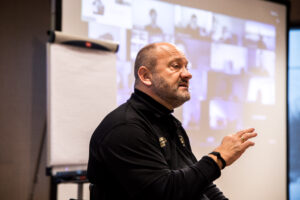

Do you still remember who Martin Schulz is? Of course you do. A few weeks ago, I would have been met with outrage if I had asked this question. Martin Schulz, the hero of the SPD! He was celebrated and hailed as the solution to all problems. His nomination as chancellor candidate sparked a real hype. Martin Schulz as the savior of social democratic politics and a serious competitor to Angela Merkel.
Well, perhaps he still is. But his heroic mantle has lost some of its luster. He is no longer the all-encompassing answer in the search for a figurehead, for a suitable face for the SPD. Current poll numbers show that he is merely a politician whom some people support, but others do not. What happened?
Attribution error – The attribution error
Western cultures are characterized by individualism. We have an independent, self-determined view of humanity. This means that we attach extreme importance to the individual and their abilities. We believe that a person can fix anything. The technical term for this is independent understanding of the self. "The new sales manager will increase sales figures." "The new CEO will get everything under control." "The new soccer coach will get the team winning again." The pressure and desire for success makes us project all our hopes onto one person."He'll fix it! He can do it! He's a total pro and knows what he's doing!" It's so wonderfully easy to believe that all the solutions are united in one person. That way, we can finally sit back and relax.
Escape into the idealized person
But the misconception catches up with us. At some point, we realize that he is only human. That Schulz, like everyone else, has to work hard to achieve top results. That he is good at some things. But not at others. Every hype experiences a counter-movement and then arrives at reality. That's a good thing. In other cultures—in India, for example—the opposite extreme is the order of the day: here, circumstances are the cause of all problems. The so-called interdependent understanding of the self. When things are in disarray, many hide behind it. "There's nothing you can do about it anyway!"
This belief in circumstances is just as unhelpful as belief in individuals. After all, someone who is an expert in one area and scores every penalty kick may be weak and clumsy in other situations. It all depends on the context. The popular presenter Johannes B. Kerner worked extremely well in the context of ZDF. After his move to SAT.1, however, this was no longer the case. Similarly, a soccer coach or striker can perform excellently in one environment and less so in another. The same applies in business life.
And what can we learn from this? Both attributions have their significance and are important in recording and classifying events. Once again, it's all about finding the happy medium. Let's clearly recognize how much the circumstances or the person are responsible for something. So let's not project the solution to all problems onto a single person. But let's not hide behind the excuses of the system either. The field in between offers so much more. Those who move here have understood a lot and can make a decisive difference.