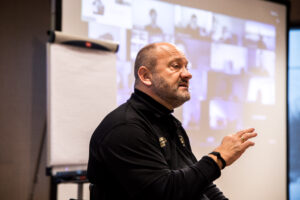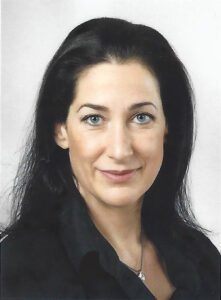

Jochen Hummel, managing partner of GLI, in conversation with Lars Kratzheller, managing director at Spaett Architekten GmbH
Leading Simple© at Spaett Architects
Hummel: Welcome to the Grundl Leadership Institute. Today's topic is customer feedback, and we're talking about our Leading Simple management system. We have Mr. Kratzheller from Spaett Architects with us today, and I'm very pleased that he's here to answer a few questions about the implementation of Leading Simple. He has been one of three managing directors since the beginning of the year. At Spaett Architects, Leading Simple is lived and breathed, if I may say so. I would be delighted if you could say a few words about yourself and about Leading Simple at Spaett Architects.
Kratzheller: With pleasure. Hello, my name is Lars Kratzheller from Spaett Architects. I have been a managing partner since January 1, 2018, and my business partners have already experienced Leading Simple themselves. In March, I also had the pleasure of participating in this intensive seminar. It was very exciting, very intensive, and challenging. I discovered many things that we have already implemented in our company and developed a different understanding of them. In my opinion, it is a very good management tool that allows us as a company to position ourselves responsibly towards our employees. Everyone knows what we have adopted as our management philosophy.
Implementation in everyday life
Hummel: What I find exciting is that you said everyone knows what the leadership philosophy should look like. But how do you manage to implement and transform the things you learn in the seminar into everyday life and convey this feeling to your team and employees? How do you manage this next step?
Kratzheller: I don’t want to get into the next step just yet; instead, I’d like to start with what we already have: the so-called EOA, the Result-Oriented Job Description, which is taught or introduced at your company. What does the EOA do? It precisely defines and describes the process that every employee in the company is responsible for. It’s a collaborative effort involving input from the employee, manager, or intern themselves, working back and forth with management. This makes it clear: This is your job, this is my job, and who is responsible for what. This clear definition helps every employee—both before and during the process—to be aware of their tasks or to regain that awareness. Let me give an example: When we welcome new employees to our company, they also receive an EOA. At first, most of them are completely taken aback. Some people don’t know what to make of it or are put off by it. Others see themselves in it and are delighted: “Hey, this is great! It’s formulated so clearly and describes exactly what my job is.” This clarity takes the wind out of the sails of many discussions. The employee knows what they have to do. The managing director knows what they have to do. The intern knows what they have to do. Everyone who is involved in the company in any way is aware of their role. Furthermore, everything is laid out in writing. Anyone can flip through it at any time and check exactly what their responsibilities are—and what they aren’t. This useful tool serves as a guide to help people find their place within the organization.
Importance of Result Orientation
Hummel: And to fill exactly the area that needs to be filled. The term Result-Oriented Job Description like a misnomer, but we Result Orientation chose it because of its Result Orientation . What does leader term Result Orientation mean to you as a managing director and leader ? What helps you stay focused on results?
Kratzheller: What we do always depends on some kind of result. Everything we do achieves some kind of result. So if I know the goal and the result, the path to get there is much easier than if I'm just wandering around aimlessly. This is my task, this is my goal, and this is the result I have to achieve—that creates clarity and provides orientation.
Hummel: If you clearly define in advance, “This is what the outcome of your task should be,” you’ll achieve very different results within the company.
Kratzheller: The idea behind it is clear. You encapsulate this idea in a word, in a construct. This helps everyone to keep their eyes on the goal. You no longer waste time in the process, which in turn leaves you with more time for other enjoyable things. For leisure, for family, for whatever. The motto is not "higher, faster, further," but rather to do something in a goal-oriented way.
Focus on responsibility
Hummel: Very good. You’re referring to that “higher, faster, further” mindset. At the Grundl Leadership Institute, we counter that with a concept of flexible, clear, deep thinking. This is about results and responsibility. As far as I know, you have already completed our free self-assessment, the Responsibility Index, as well as the extended analysis focused on responsibility. What did that trigger in you, and what added value did you derive from it to fulfill your leadership role?
Kratzheller: That prompted me to revisit the topic. I see my status quo, know where I stand, where my strengths lie, where my weaknesses are, where I can improve, and what I don't want. Based on this, I set a goal for myself with a view to the future. The test helped me define my status quo and my goal: Where do I want to go, where can I go, and how can I improve to achieve my goal?
Core of the seminar
Hummel: You have now attended the seminar, experienced its intensity, and the effort that goes with it. If you were to summarize the essence of our seminar in two sentences, what would be the special, important point?
Kratzheller: It's difficult for me to sum up my many impressions in just a few sentences – but in any case, the topics responsibility moving away from "higher, faster, further" are central to me. Everyone is running on a hamster wheel, rushing back and forth – this is where society needs to change. We must learn to take personal responsibility ourselves and our environment so that we can breathe again and focus on the things that bring us joy. That we do the things we love to do with passion. When I lose the strength to do that, I reach a critical point. I take away with me that I personally need to be more mindful of myself and the environment and try to slow down. That is an important diamond. As Grundl says: Which diamond will you take with you?
Hummel: Dear Mr. Kratzheller, I am very pleased that you have taken the time to tell us about your everyday management experience with Leading Simple. I wish you all the best for the future! I hope you continue with the transformation and continue to implement the topics responsibility mindfulness for yourself. Thank you very much!