
"Our leader with change; they're not ready yet." This statement gives me the impression that management is looking down on the trainees. This is anything but a level playing field. "We're already further along... and they just don't get it," is the message.
Most representatives of this message are extremely experienced in seminars and have dedicated their lives to human development. They talk about "them" and "us." Them are the others, the ignorant, those who need to be educated. Us are the educated, the certified, the enlightened, so to speak. And because they know so much, they feel superior to the ignorant. The illusion of perceived superiority strikes. They have long recognized this; I am talking here about the weaker characters in the HR field. And yes, there are also many who are really strong. But the weak ones ensure that the HR image suffers.
Human development is the most beautiful thing in the world.
The number of leader who approach training with great skepticism and inner resistance is increasing. "Experience shapes us," is the response from those surveyed. The most hated phrase among those who are tired of training is: "So, how does that make you feel?" If this becomes too prevalent, the HR department must be careful not to make itself redundant. That would be a shame, a great shame. After all, isn't human development the most beautiful thing in the world? Just recently, I was once again prepared for an encounter with "them."
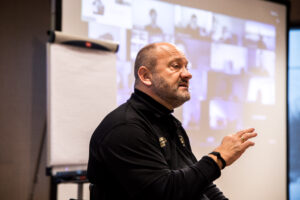
And I am told a lot. In detail. In great detail. Why this group of employees is so difficult. Where I will encounter resistance in the seminar. In reality, I meet 150 engineers. Very interested. Open. Critically questioning. Thoughtful. All in all, they are really great leader, alert people who want pragmatic approaches to their everyday lives. Then my appearance on stage: at first, everyone is reserved. Scrutinizing. As if to say: let's see who we're getting this time. What he's going to do with us. Then relief. He doesn't want anything from us. He invites us to "think for ourselves." They are fully receptive. And I ask myself:
"What's going wrong here?"
What needs to happen for people to want to come back to us trainers again and again and learn? Here is my attempt at an analysis: The explosion of knowledge (knowing) is growing much faster than our emotional ability to implement it (doing). Those who accumulate more and more knowledge suffer greatly when they cannot really implement it in themselves and others. Idealism drives, reality slows down. Frustration increases. An inner pressure builds up, which is then vented on those who are unwilling to change. And they sense the lack of respect and close themselves off.
What does the solution look like?
Once again: start with yourself. Look in the mirror. What do I already know? What can I do? What do I want to be even better at? Be careful: there are very few things that you can really do well! And most importantly: don't think that because you know a lot, you are superior to others.
That's why you're not really happy.
Why success and fulfillment have nothing to do with each other.